For anyone running a motorcycle brand, the most painful moment is often not when the bikes won’t sell, but when you have a brilliant product idea in your head and your team has drawn up perfect design blueprints, only to take them to a Chinese contract manufacturer and get a bucket of cold water thrown over you.
“You want to change this frame geometry? We’d need to cut new molds, and the minimum order quantity starts at 500 units.”
“We can’t build this all-new battery compartment layout of yours. We can only use our factory’s existing shared-mold chassis and wrap a shell around it.”
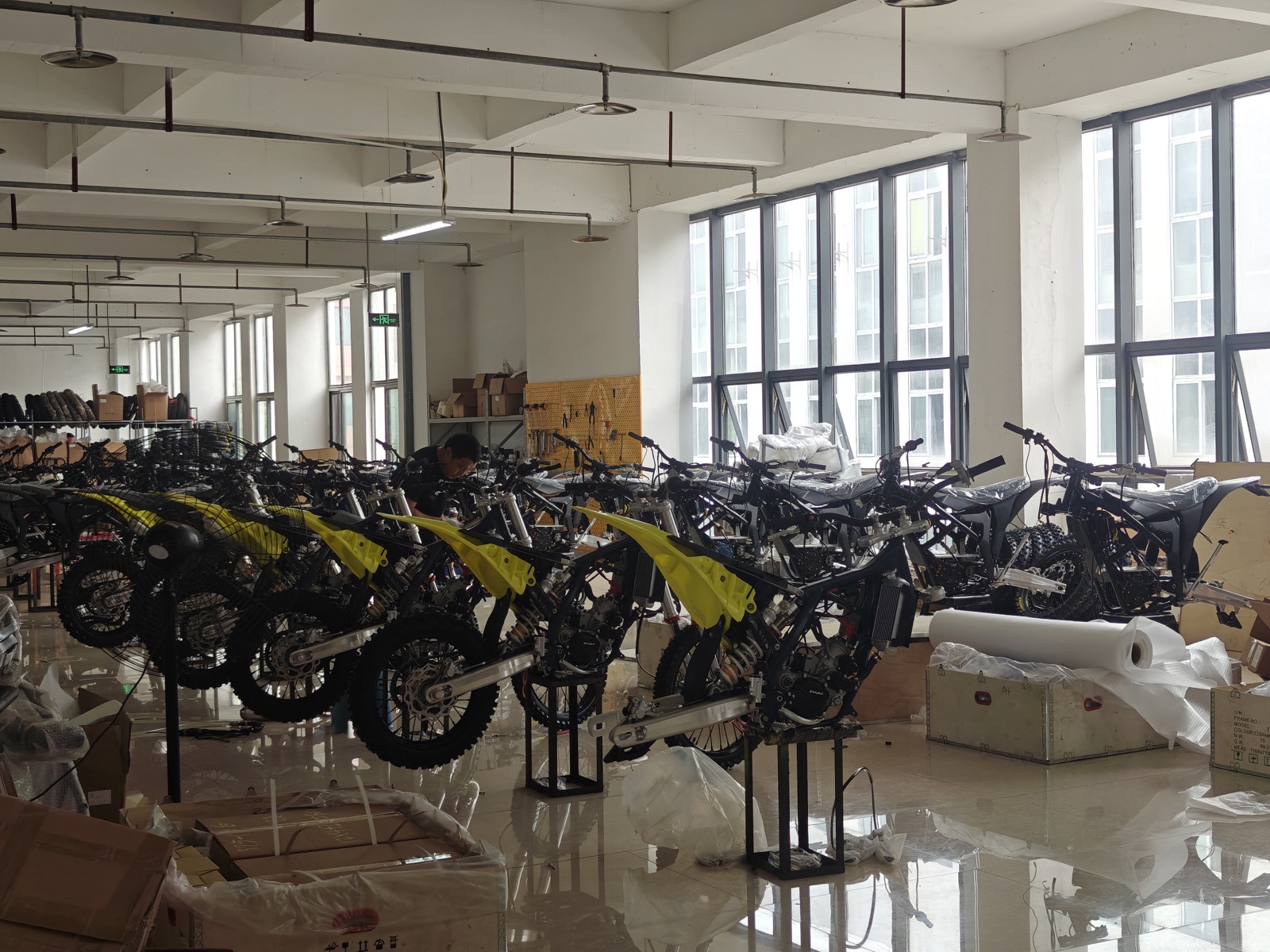
Under the traditional contract-manufacturing model, the vast majority of factories, in order to control costs and turnover rates, are only willing to do “light customization”—swap decals, change colors. Once a customer’s own design touches the underlying frame, suspension structure, or a custom battery, the factory either refuses outright or scares you off with an extremely high threshold. In the end, many excellent original designs are forced to compromise into cookie-cutter assembled bikes that look like everything else on the street.
Does a build concept really have to bow down to an outdated production line? Facing this problem that plagues countless overseas brand owners and designers, the off-road brand TAIMUMOTO from Dazu, Chongqing, gives an extremely hardcore answer: as long as the engineering foundation is solid enough, creativity can be completely free of production-line constraints and move smoothly into mass production.
From “shell-swapping and going through the motions” to “engineering translation”: turning blueprints into real bikes that can fly
Developing a new bike from a customer’s own design tests not the factory’s speed at turning screws, but the engineering team’s ability to do “forward development.”
Many pure contract manufacturers only know how to do assembly-line fitting. Hand them a blueprint and they have no idea what grade of tubing to use, let alone how to do stress analysis on the chassis. TAIMU’s confidence lies in the fact that, since founder Shi Jian shifted to manufacturing in 2018, he rejected the shortcut of assembly for quick money. Over three years he poured tens of millions into relentless in-house R&D, even selling property to keep research going, and built up his own chassis and powertrain database.
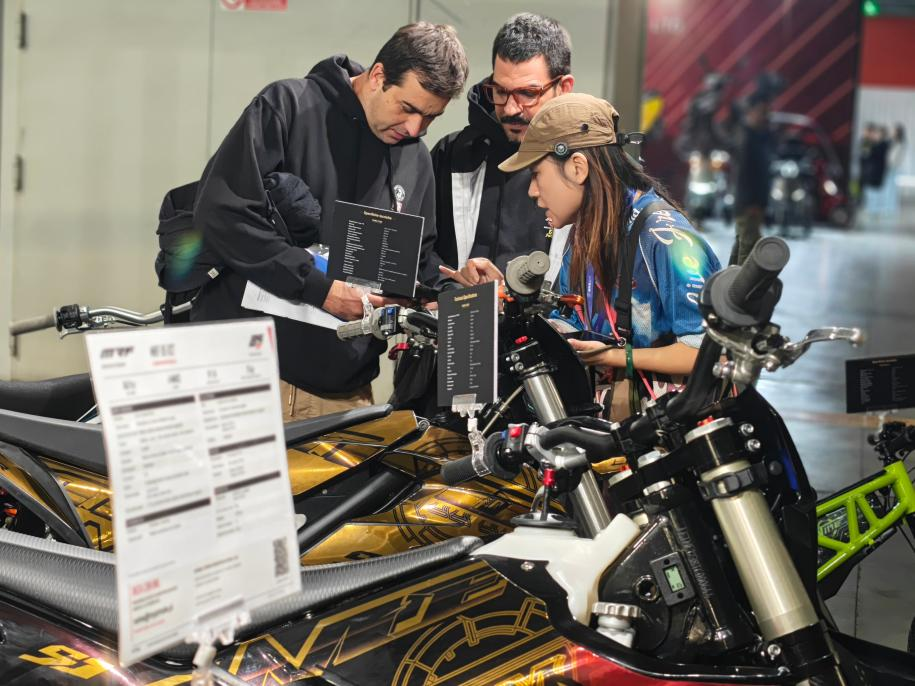
When a customer brings a design to Dazu, TAIMU’s engineers get involved from the very source. Want to modify frame geometry? Engineers will help you evaluate tube wall thickness and stress points to make sure it won’t crack when it lands from an extreme jump. Want a unique power delivery curve? The calibration logic of the underlying EFI system can be rewritten specifically for you. Translating the customer’s creativity into rigorous engineering language and using real physical data to support the beauty on the blueprint—that is the first step toward smooth mass production.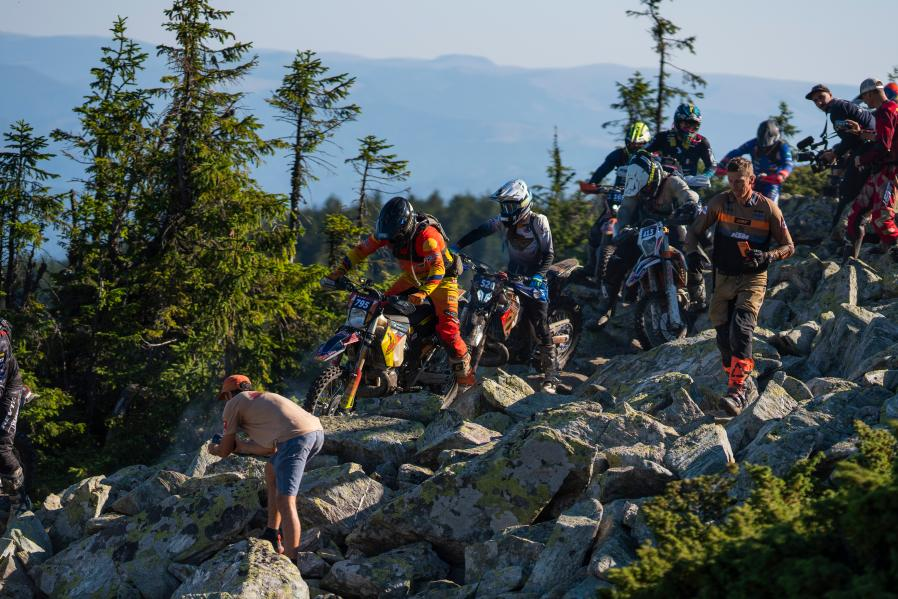
The toughest bone to chew: custom batteries and upfront compliance
If the customer brings an all-new electric off-road design, the difficulty rises exponentially. Because once the battery pack shape and capacity change, all the previous transport and market-access certifications are basically void.
This is a hidden reef across the whole industry. Many big factories have UN38.3 reports for their standard batteries, but when faced with a customer’s custom version, they push the order back with a single line: “The volume is too small, we can’t get a new report.” The result is that a custom bike worth hundreds of thousands is built, but gets stuck at the port for lack of a piece of paper.
TAIMU’s approach is to embed compliance directly into the development process. Even for the first small-batch battery PACK custom-made exclusively for a customer, the factory will separately send it to a third-party lab for a full set of tests and issue a report, completely clearing the fatal obstacle of ocean shipping and customs clearance. For combustion-engine bikes, deep EFI calibration headroom is reserved, with dedicated tuning for different countries’ emissions regulations and fuel quality.
Low-cost trial and error: don’t let mold costs crush a good idea
No matter how good the idea is, if the first batch means sitting on hundreds of units of inventory, that’s a fatal financial risk for any brand owner.
TAIMU offers great flexibility in its cooperation models. For new bikes developed from a customer’s own design, the factory supports small-batch trial production and prototype sampling. Once the prototype is out, you can take it straight to the worst mud track locally and send it off jumps, exposing defects under real-world conditions, and the factory will then modify molds and adjust data based on the feedback.
At the mass-production shipping stage, TAIMU allows newly developed custom models to be mixed into the same container as the factory’s mature standard models. At the lowest capital cost, you can put a brand-new idea into your local market to test the waters, and once it works, place a big order to scale up.
Backed by real strength: race-grade quality control endorses your brand
Why does the factory dare to take on customers’ deep custom blueprints? Because TAIMU’s manufacturing baseline has been squeezed out on the world’s toughest race courses.
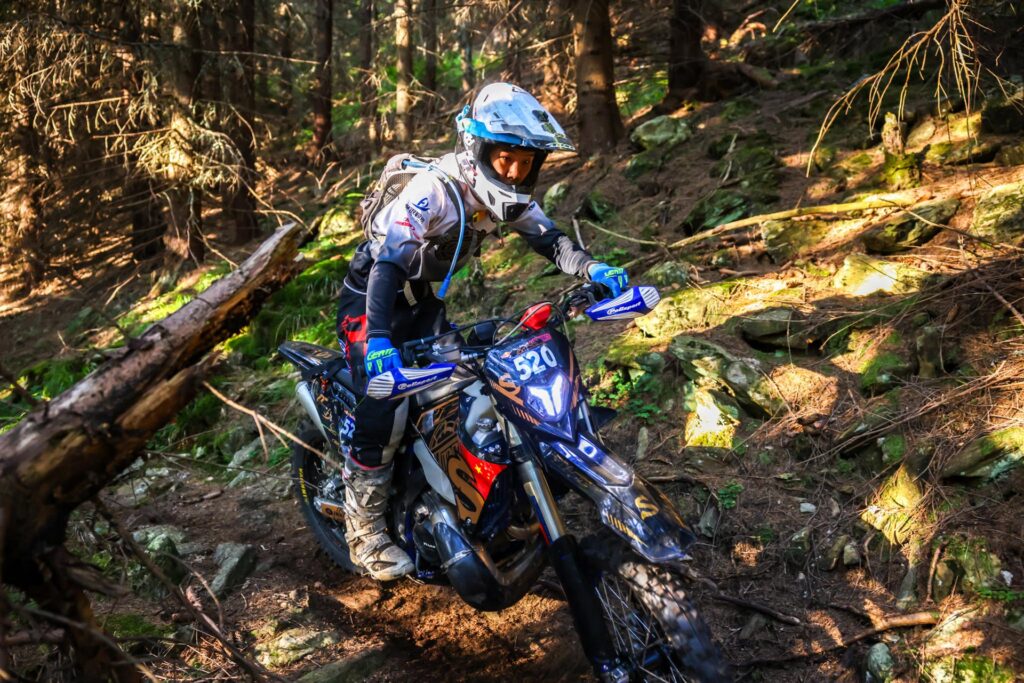
In July this year, TAIMU sent a stock production S300R priced at 27,800 yuan straight into the Red Bull Romaniacs hard enduro. Not a single screw was changed, and its own rider finished in the top 20 of the Bronze class. After the race, Shi Jian returned home with mud-covered data, and the first thing he did was reinforce the rear brake bracket and upgrade the EFI across the whole lineup. At the just-concluded domestic Dazu off-road race, this same stock team once again took one gold, one silver, and one bronze.
This engineering habit of feeding race experience back into mass production means that even for a brand-new model deeply customized by a customer, its chassis structure and the quality-control standards for core components can still share this system proven under extreme conditions. The Malaysian police’s bulk purchase of its police off-road motorcycles is the hardest trust endorsement for this manufacturing system.
Conclusion
Chinese factories long ago moved past the era of only doing build-to-print processing and competing to the death on low prices. A truly capable source factory can not only turn blueprints into real bikes, but also help you nail down chassis data, solve the compliance challenges of custom batteries, and even back you up with race-grade quality control.
TAIMUMOTO is currently opening deep OEM/ODM joint development to the world. As long as you come with a mature design and the needs of your target market, leave the rest of the engineering execution to the workshop in Dazu. Your build concept doesn’t have to be limited by any production line—send the drawings over and let the engineers run the numbers.