TAIMU MOTO founder Shi Jian uses real action to tear off the “all show, no go” label from Chinese-made motorcycles
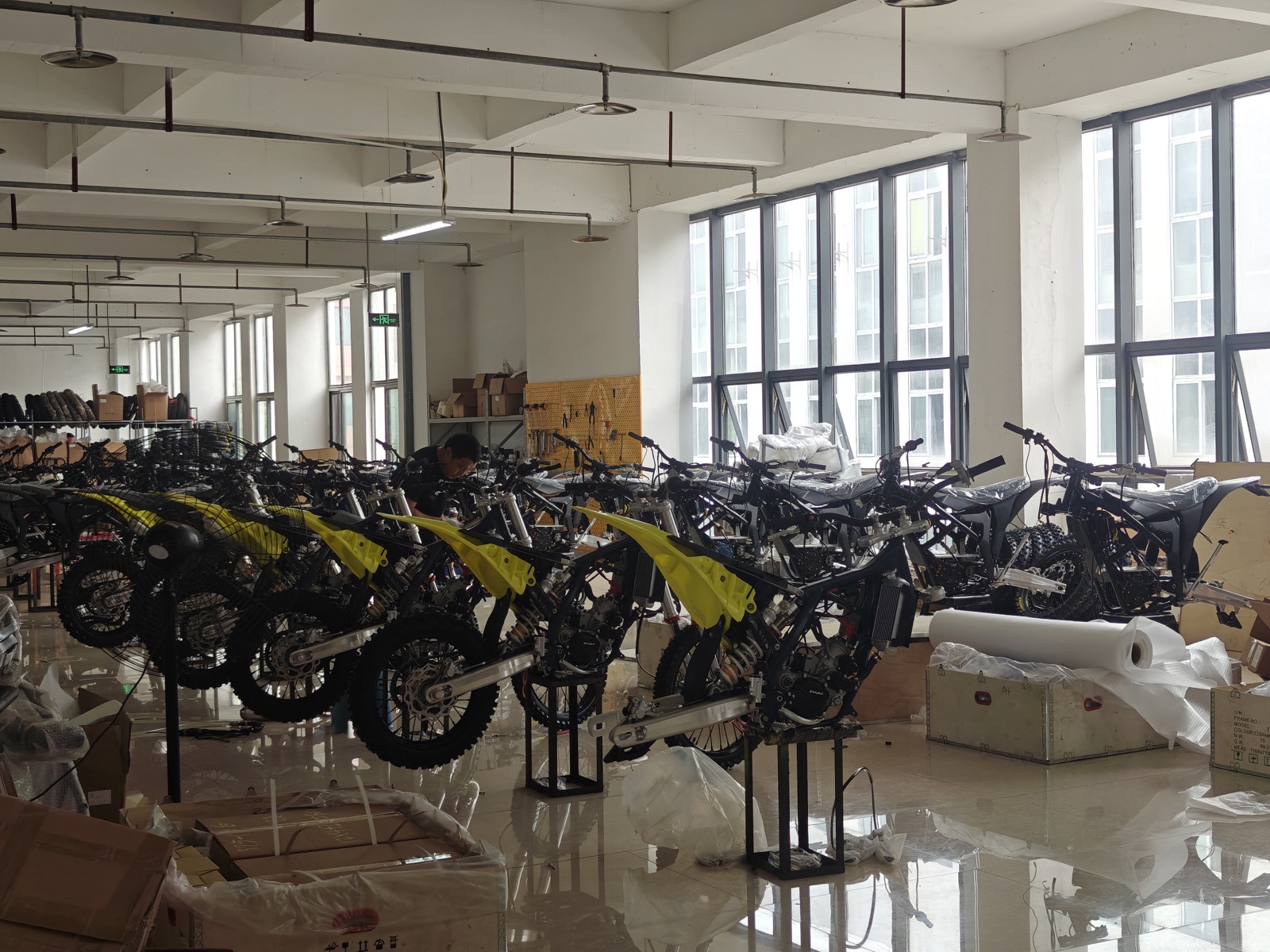
October 2026, Chongqing—Inside a factory building in the Dazu High-tech Zone of Chongqing sit several mud-caked off-road motorcycles. One of them had just finished the event known as the “hell-tier” Red Bull Romaniacs hard enduro this July. This bike sells for only 27,800 yuan—not even enough to buy a single set of shock absorbers for many overseas race teams—yet it completed that entire unimaginably brutal course.

The maker behind this is TAIMUMOTO. In China’s fiercely competitive motorcycle circles, TAIMU and its founder Shi Jian stand out sharply.
“Doing motorcycles in China, there’s an unspoken shortcut called ‘open-mold bikes.'” Shi Jian sits behind the display stand, a hint of helplessness in his tone. He explains, “An open-mold bike means every part on the market can be bought directly, brought back to the factory to be assembled, slapped with your own decals, and turned into a ‘self-developed’ new model. No R&D cycle needed, no mold costs, no need to bear the risk of trial and error—as long as you’re bold enough, the money comes fast.”
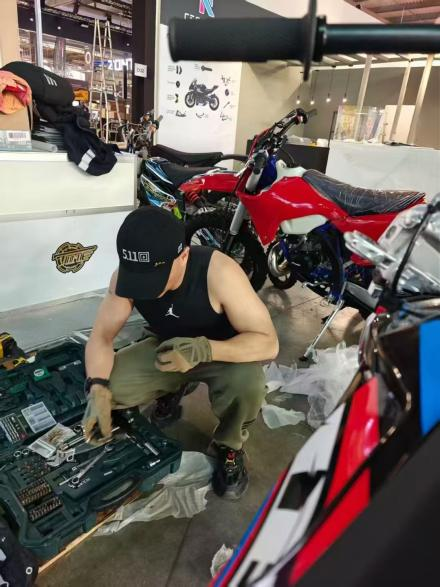
But over the past few years, Shi Jian has not taken a single step down that “shortcut.” “From beginning to end, we have never made a single one of those assembled models that everyone on the market is doing.” Saying this is easy, but the price paid behind it is real money that most people could not bear.
Since 2023, TAIMU has poured all its energy into independent R&D. The company has only two shareholders: Shi Jian and his partner Ximi. To support the high R&D costs, the two invested more than 10 million yuan in total. What to do when the money ran short? Ximi sold two apartments, and Shi Jian sold two as well. At the hardest point, the company had only a few hundred thousand yuan left in its accounts, unable to make ends meet, and even normal operations became a problem.
“Ximi often told me he couldn’t sleep at night. I said I couldn’t sleep either.” Recalling those days, traces of anxiety still linger between Shi Jian’s brows. In the middle of it all, investors did come knocking wanting to put in capital, but faced with the money delivered to his door, Shi Jian refused. “Capital chases profit. Once it comes in, it definitely wants to recoup its investment quickly. Once a large amount of capital intervenes, you have to pursue rapid returns, and the founder may not be able to freely do what he wants to do. It becomes very hard to focus on making one product well, and that changes your original intention.”

Three years of R&D, consecutive years of losses—what exactly is Shi Jian after?
“I was originally a motorcycle dealer and only transitioned to manufacturing in 2018. I used to sell Suzuki officially imported motorcycles. Based on my understanding of motorcycles, I believe Chinese people can build bikes about as good as theirs.” Shi Jian’s conviction stems from his confidence in the words “Made in China,” and even more from his dissatisfaction with the overseas prejudice of past decades.
“For decades, when foreigners mentioned Chinese motorcycles, especially race bikes, they always said they were ‘all show, no go,’ ‘garbage,’ things that break after two days of riding.” That sentence stuck in Shi Jian’s heart like a thorn. He simply refused to accept it. “I want to prove that things made in China are not as bad as they think, that they can stand on the world stage and they can run.”
How to prove it? Giving a PowerPoint presentation on a display stand is useless—you have to take the bike to a real, no-holds-barred race. In July 2026, TAIMU sent a factory-stock production S300R to compete in the 23rd Red Bull Romaniacs hard enduro. At the time, peers saw this as a crazy move. The event’s finish rate has been below 60% over the years, with a course covering rock gardens, mud bogs, and steep slopes—widely recognized as the hardest off-road race in the world. Even crazier: this team had no foreign riders, only Chinese riders from its own factory team; and the S300R remained in factory condition throughout, not a single screw changed, not a single parameter adjusted—not even the top-tier race-specific suspension was swapped in.
“The foreign race bikes competing alongside us spent as much as 120,000 yuan just modifying one set of race shock absorbers.” That’s 120,000—enough to buy four complete TAIMU bikes. During the race, many foreign teams came over to look at this Chinese bike selling for only 27,800 yuan. They found it incredible: the Chinese actually dared to run a factory-stock bike on such an extreme course.
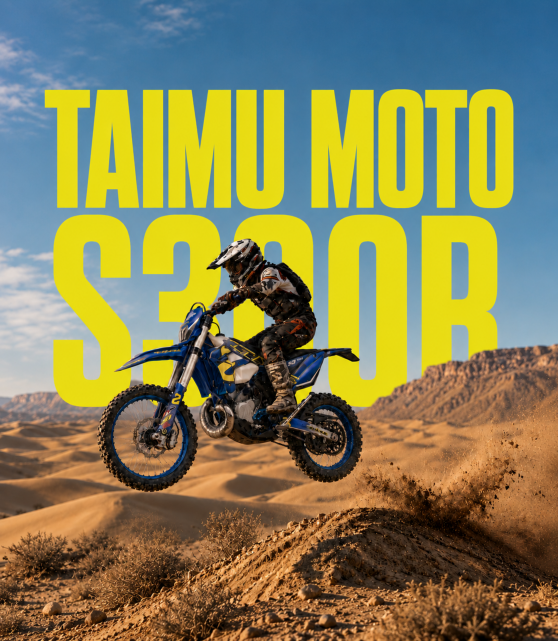
Rider Yang Songyi looked especially tenacious on the course. On the low-altitude, high-difficulty sections, he even overtook riders ahead several times, at one point running as high as 20th in the Bronze class. Although he was forced to retire on the fourth day after running out of energy and crashing into a ravine on a treacherous section, his GPS ranking at retirement was still 50th.
More than results, Shi Jian cares about the bike’s real performance under extreme conditions. “Winning or losing doesn’t matter, ranking doesn’t matter. I insist on racing with bikes from my own factory. I have to know exactly what flaws my bike has.” He dislikes the “double standard” approach of racing with one set of good parts while selling users another set of ordinary parts.
“Whatever the bike is like on the race course, that’s what the bike sold to users is like.” After the race, Shi Jian returned to the Dazu workshop covered in mud and immediately had the team optimize the rear brake bracket issue exposed during the race; upgrade the entire lineup from carburetors to electronic fuel injection; and optimize frame dimensions based on the actual body sizes of Asian riders.
“Whether the people building the bike put their heart into it, or just treat it as a business—users can definitely feel it,” Shi Jian says. Even though the books are still in the red, he feels he’s on the right path. Because in the past two years, many factories that made quick money assembling open-mold bikes have seen sales start to decline this year, while TAIMU, which insisted on independent R&D, has finally completed its full product line this year and is seeing growth.

“Even if we sold the factory, we wouldn’t be short of money. But I don’t want to be an entrepreneur who just chases quick money. I want to be someone who truly dares to send a race bike onto the course.” Shi Jian’s words are like his name—hard, yet they land with force.